




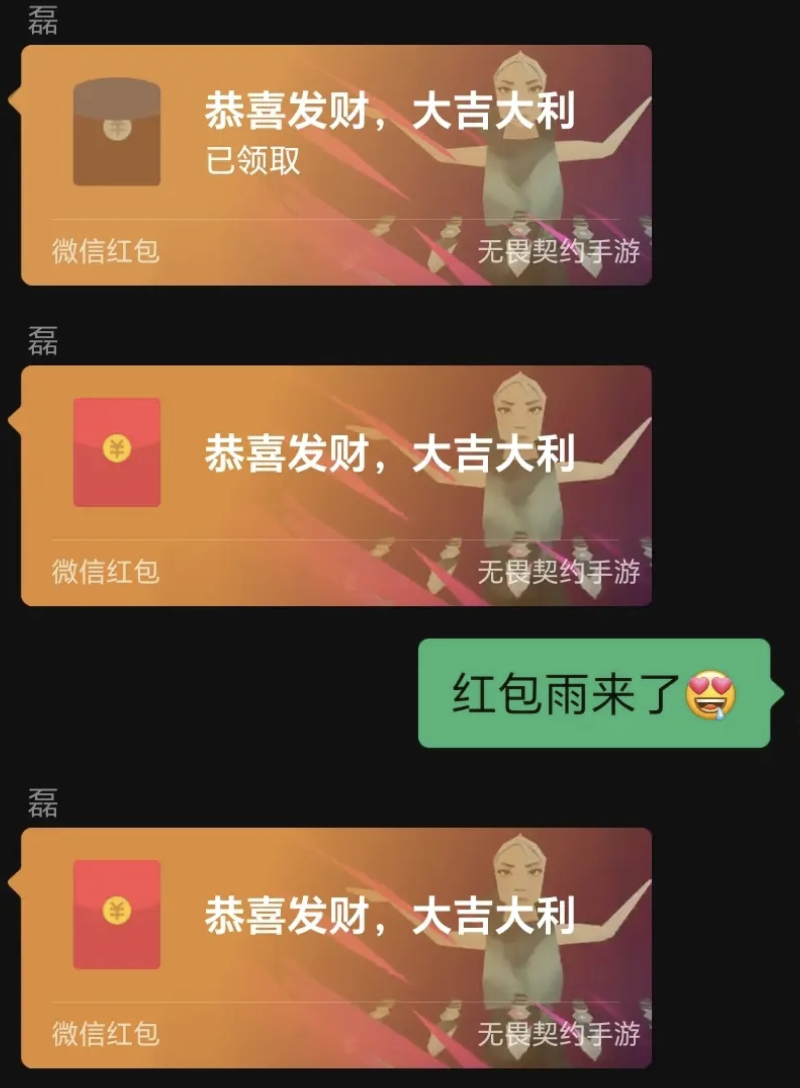
During the Spring Festival, overseas ChineseWeChat group(Family groups, classmate groups, alumni groups) will usher in the most glorious moment of the year—"Red envelope"Rain." Regardless of the amount, grabbing red envelopes is all about the excitement and luck. The most frustrating moment: A red message suddenly pops up in the group chat: "Congratulations on getting rich! Good luck and prosperity!" Your adrenaline surges, and your fingers tap the screen at millisecond speed.
After spinning for 3 seconds, a merciless notification popped up: "Too slow, the red envelopes are all gone."ClickUpon closer inspection, it became clear that all my extended family back home, and even my elementary school classmates who usually lurk online, had managed to snag a deal. Only I, being overseas, lost out due to the physical delay. This wasn't just about missing out on a few dollars; it was also about missing the chance to gloat with emojis in the group chat.
Why are overseas netizens always a step behind in grabbing red envelopes?
Here's a little-known fact: WeChat red envelopes are distributed on a "first-come, first-served" basis, with random allocation.
In other words, it's not that everyone clicks on the app at the same time, and the system randomly assigns a sum of money. Instead...The order in which you click determines your position in the queue.The amount is randomly distributed from the remaining pool.
The earlier you click, the fuller the pool becomes, and the higher your chances of getting a large sum. The later you click, the emptier the pool becomes, and you're likely to get leftovers. With equal speed, overseas participants are already 0.5 seconds behind from the start. In a large group of hundreds, that 0.5 seconds means "missing out on a fortune."
A set of measured data
To quantify this issue, I conducted a simple test:
- Test methods: Measure the time taken from "clicking the red envelope" to "seeing the result" under different network environments.
- Test environmentHome WiFi 200Mbps, West Coast of North America (Los Angeles)
| Network status | Opening the red envelope takes time | Subjective experience |
|---|---|---|
| No acceleration (direct connection) | 400-800ms | It's noticeably slow, and I often can't get a ticket. |
| Regular VPN | 300-600ms | Slight improvement, but unstable. |
| QuickFox | 100-200ms | Smooth, similar to the experience in China. |
What's it like to experience 100-200ms? You can barely feel the delay; the result appears instantly after clicking. This difference may seem small, but in a scenario where "10 people in a group are simultaneously trying to grab 5 red envelopes," a difference of 100ms can mean the difference between "winning" and "failing."
How can QuickFox help you improve your luck?
While QuickFox cannot control the randomness of the red envelope amount, as a low-latency accelerator for returning to China, it can help you overcome the disadvantages caused by physical distance. After acceleration is enabled, QuickFox will prioritize processing WeChat's data requests, significantly reducing cross-border ping values and effectively preventing packet loss during network congestion. This ensures that the command reaches Tencent's server at the fastest speed the moment you click "on," preventing you from missing out in the battle of speed and greatly increasing your chances of getting the "best luck."
Don't let distance become a stumbling block to your luck. Open QuickFox and be the luckiest person in this Spring Festival's red envelope rain!